India
Darjeeling
“Queen of the Hills”
Darjeeling lies about 4° north of the Tropic of Cancer, just outside the tropics, so it has real seasons and cool winters. It is on this site because it was built for the same reason as the tropical hill towns: as a retreat from the heat of the plains below.
Right now in Darjeeling
Live weather from MET Norway, . Forecast for the city’s altitude.
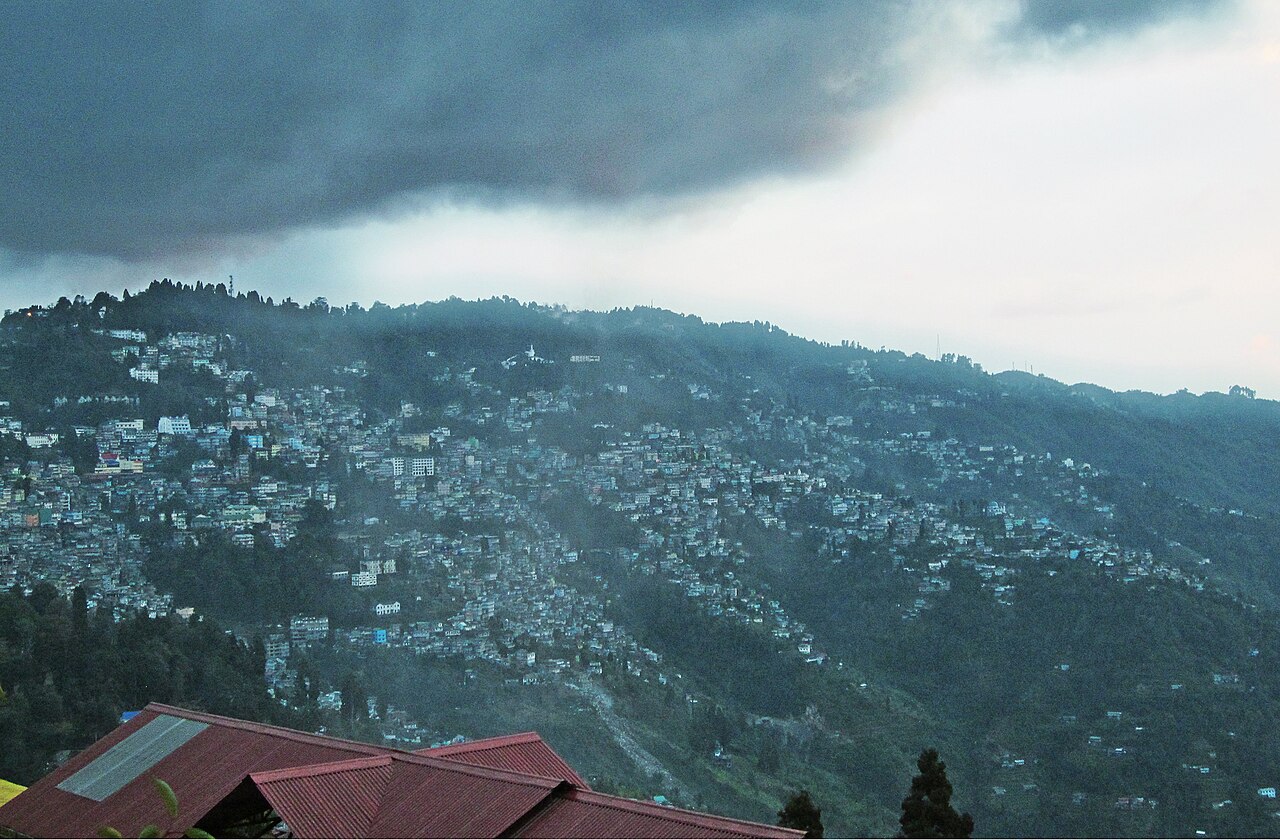
The British developed Darjeeling in the 1830s and 1840s as a sanatorium and summer retreat for officials from Calcutta. It sits on a ridge in the Himalayan foothills, about 2,000 metres up, facing Kangchenjunga.
The tea grown on the surrounding slopes became one of the most famous in the world. The Darjeeling Himalayan Railway, the “toy train” opened in 1881, still climbs up from the plains and is a UNESCO World Heritage Site.
Climate through the year
Average afternoon highs vary by only about 10°C between the warmest and coolest months.
Show as a table
| Month | High °C | Low °C | Rain mm | Siliguri high °C |
|---|---|---|---|---|
| Jan | 10.1 | 1.1 | 54 | 21.9 |
| Feb | 11.6 | 2.6 | 82 | 24.2 |
| Mar | 15.0 | 5.5 | 125 | 28.3 |
| Apr | 17.6 | 8.3 | 178 | 30.1 |
| May | 18.7 | 10.9 | 343 | 30.1 |
| Jun | 19.9 | 13.8 | 579 | 30.3 |
| Jul | 19.9 | 14.8 | 806 | 30.2 |
| Aug | 20.3 | 14.7 | 590 | 30.6 |
| Sep | 19.6 | 13.8 | 529 | 30.1 |
| Oct | 17.8 | 10.6 | 175 | 29.2 |
| Nov | 14.8 | 6.6 | 45 | 27.2 |
| Dec | 11.6 | 3.1 | 44 | 23.7 |
The altitude difference
6,710 ft
400 ft
Photographs
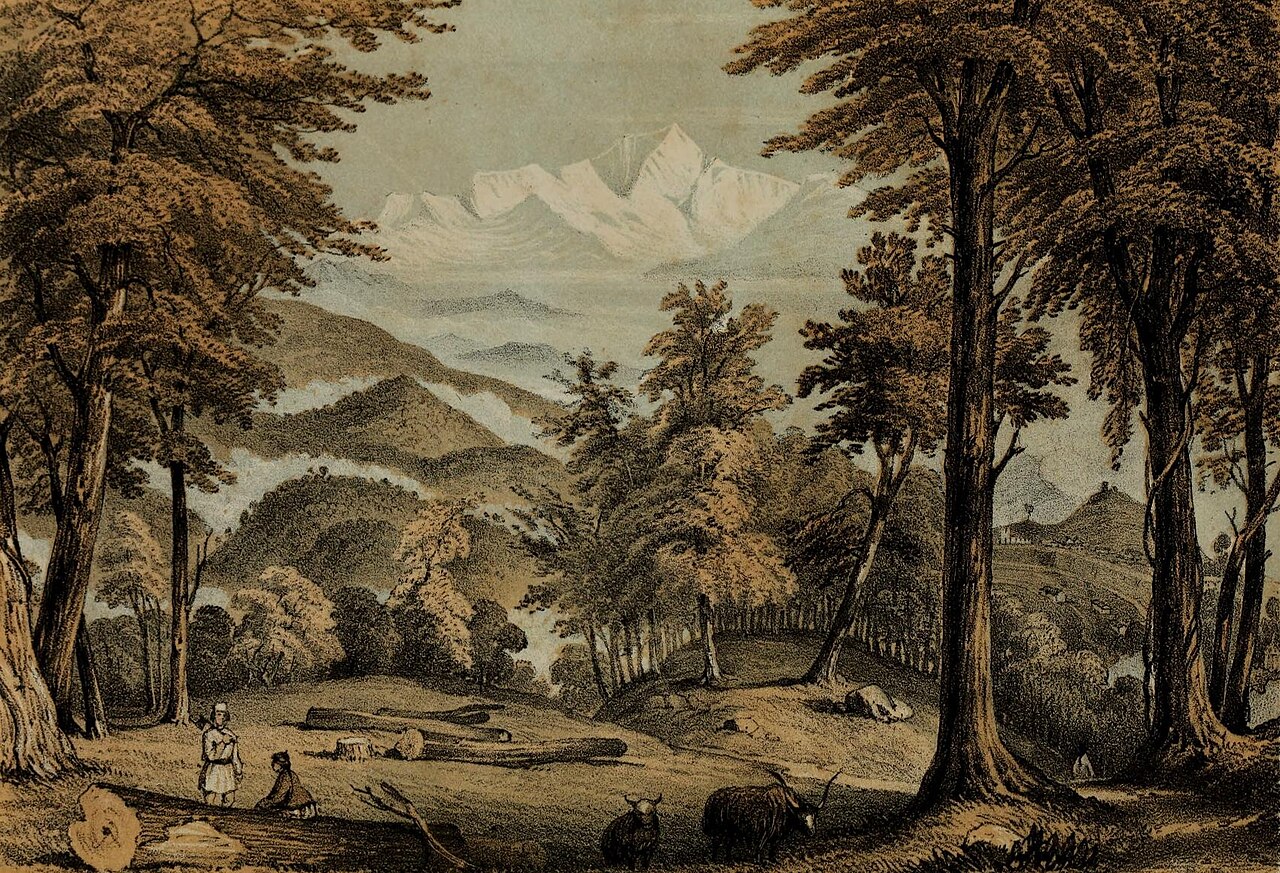
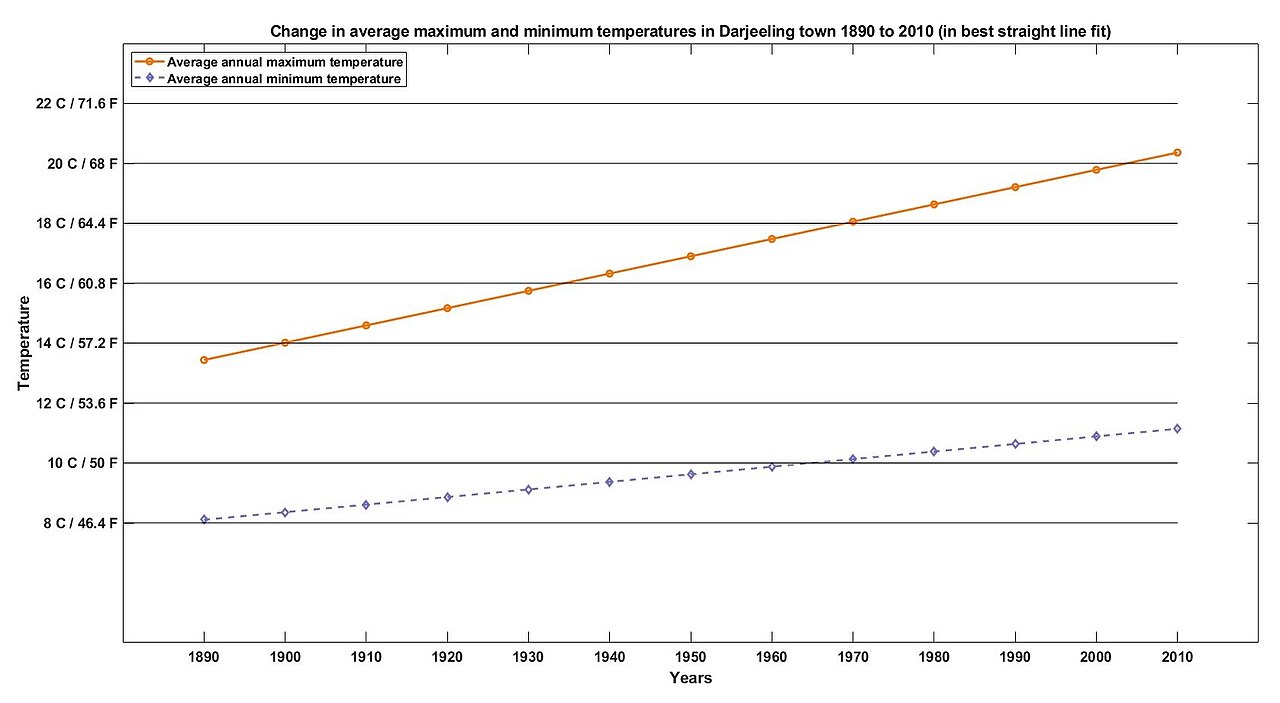
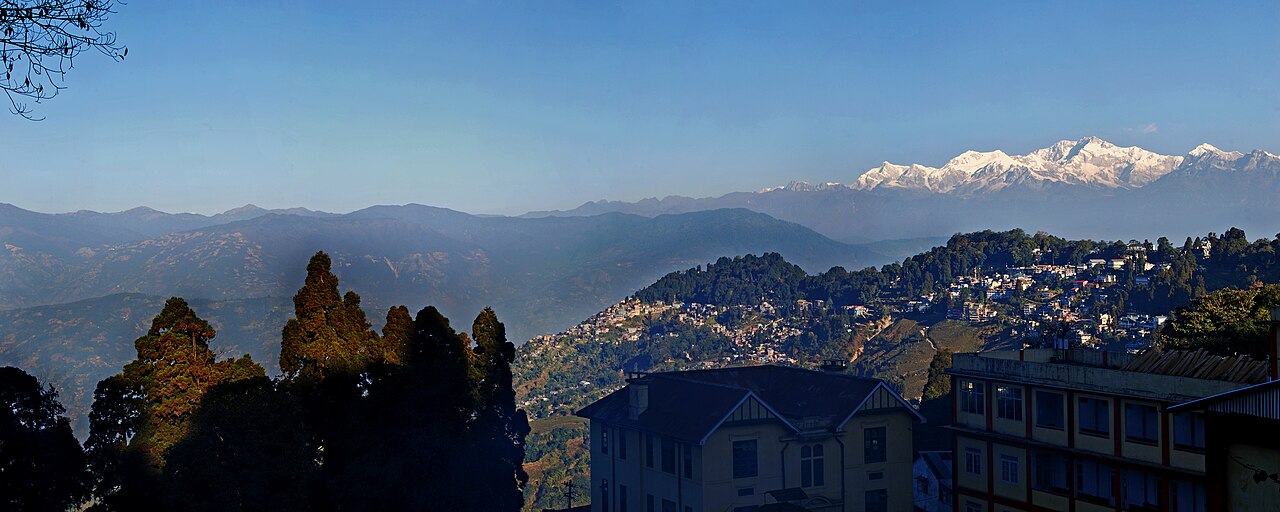
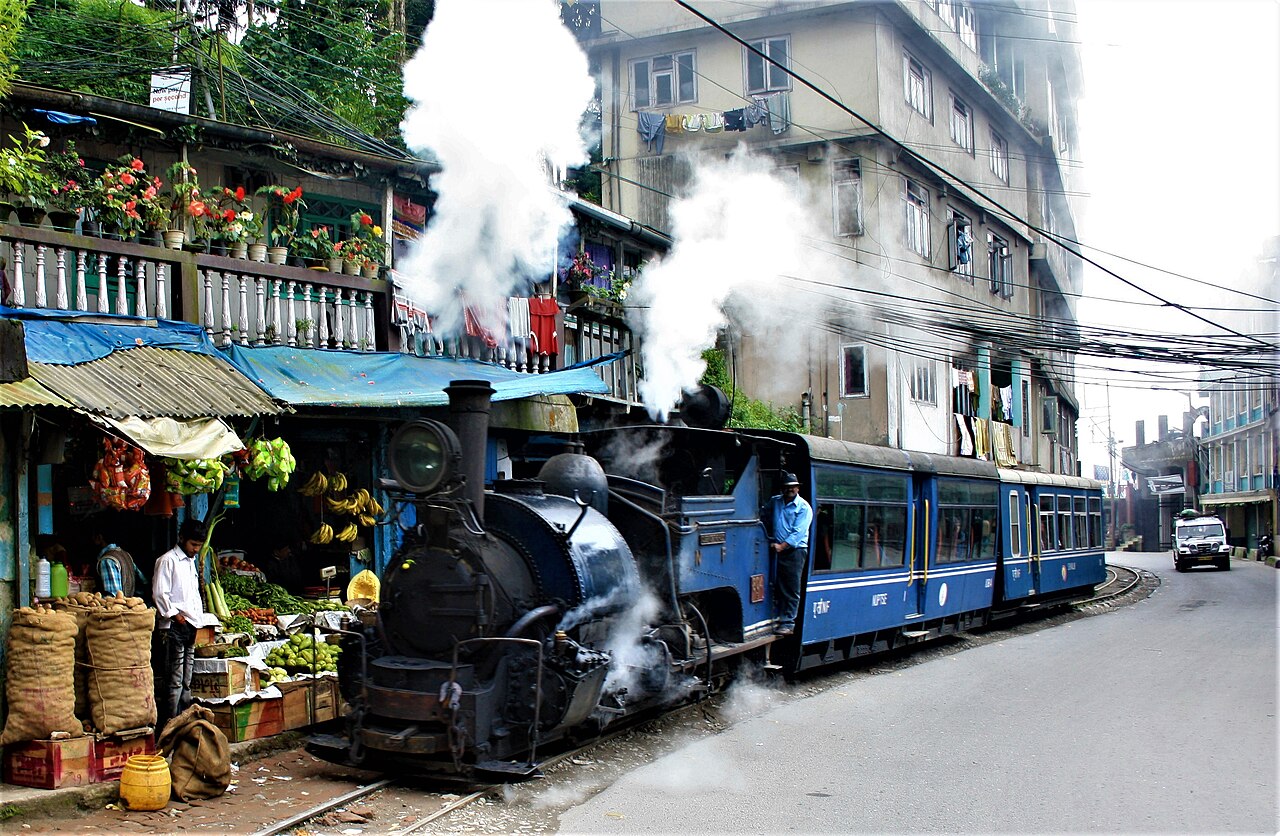
Photo credits
- Piyush Tripathi, CC BY-SA 4.0, via Wikimedia Commons
- W. Taylor, Public domain, via Wikimedia Commons
- Fowler&fowler (based on Basumajumdar, A. (2016), "Impact of Global Warming on Climate Change Regarding Water Supply in the Darjeeling Hills of the Eastern Himalaya and Change in Mountain Ecology", in Chand, Raghubir; Leimgruber, Walter (eds.), Globalization and Marginalization in Mountain Regions: Assets and Challenges in Marginal Regions, Perspectives on Geographical Marginality, vol. 1, Switzerland: Springer Nature, pp. 161–172, doi:10.1007/978-3-319-32649-8, ISBN 978-3-319-32648-1), CC BY-SA 4.0, via Wikimedia Commons
- benjamin chia, CC BY 2.0, via Wikimedia Commons
- Arne Hückelheim 2010-09-21 12:41:53 This is a cropped in which the glare has been lessened, CC BY-SA 4.0, via Wikimedia Commons


